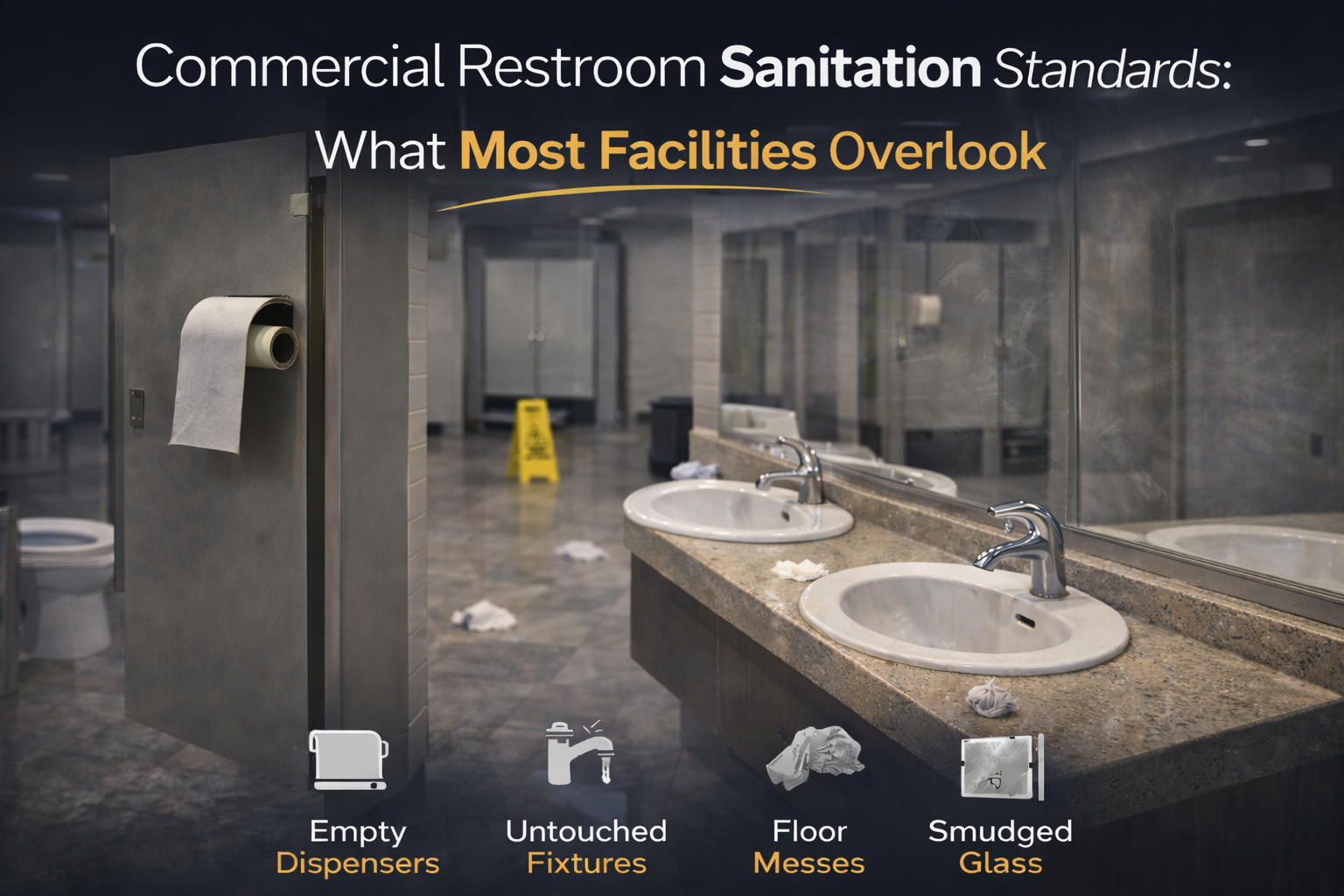

Commercial restrooms are one of the most visible indicators of how a facility is maintained.
Employees notice them. Customers notice them. Inspectors notice them.And yet, many facilities overlook the small but critical sanitation standards that separate a truly professional environment from one that simply appears “clean enough.”Here are the areas most commonly missed.
Evaluating Your Current Cleaning Service?
📞 916-460-8292
🌐 famenterprisehub.com
1. Dispenser Monitoring and Restocking
An empty paper towel or toilet paper dispenser immediately signals neglect.
Even if the restroom was recently cleaned, a lack of supplies creates frustration and reflects poorly on management.
Professional restroom sanitation includes:
- Routine supply checks
- Scheduled restocking
- Monitoring usage patterns
- Preventative refill scheduling
Cleanliness is incomplete without availability.
2. High-Touch Fixture Sanitization
Faucet handles. Stall locks. Door handles. Soap dispensers.
These are some of the highest-contact surfaces in any commercial building.
Wiping visible surfaces is not enough. Proper sanitation requires consistent attention to these touchpoints with appropriate disinfecting procedures.
When overlooked, cross-contamination risk increases — especially in high-traffic environments.
3. Mirror and Glass Detail
Smudged mirrors, water spots, and streaked glass may seem minor.
But they stand directly in front of users. People naturally look at mirrors. Imperfections are immediately noticeable.
A professionally maintained restroom includes:
- Streak-free mirror cleaning
- Detail wiping around edges
- Proper glass-safe products
- Final inspection for clarity
Detail work separates average service from professional standards.
4. Floor Edges and Corners
Most facilities focus on visible walking paths.
But restroom corners, stall edges, and areas behind fixtures often collect buildup.
Over time, neglect in these areas leads to:
- Odor retention
- Visible grime accumulation
- Perceived uncleanliness
Professional restroom sanitation includes attention beyond the center of the floor.
5. Odor Control Through Prevention
Air fresheners mask symptoms. They do not address causes.
Odor control requires:
- Proper surface disinfection
- Routine drain maintenance
- Consistent trash removal
- Moisture control
When underlying sanitation is handled properly, odor issues decrease naturally.
6. Consistency Over Time
The most important restroom standard is consistency.
One well-cleaned restroom does not define quality.
Daily reliability does.
In commercial environments — offices, retail spaces, banks, and medical facilities — restroom presentation influences overall perception of the business.
When restrooms feel neglected, customers may question broader operational standards.
Professional Standards Require Structure
Strong restroom sanitation is not about reacting to complaints.
It is about maintaining clear procedures, defined schedules, and attention to detail before issues develop.
At FAM Enterprises, we approach restroom sanitation as a structured process — ensuring supplies are maintained, touchpoints are disinfected, and presentation remains consistent day after day.
Reviewing Your Restroom Sanitation Standards?
If recurring supply issues, odor concerns, or detail inconsistencies have become noticeable, it may be time to reassess your service structure.
We are available to schedule a walkthrough and outline a dependable commercial maintenance plan.
Request a Commercial Cleaning Quote
📞 916-460-8292
🌐 famenterprisehub.com